
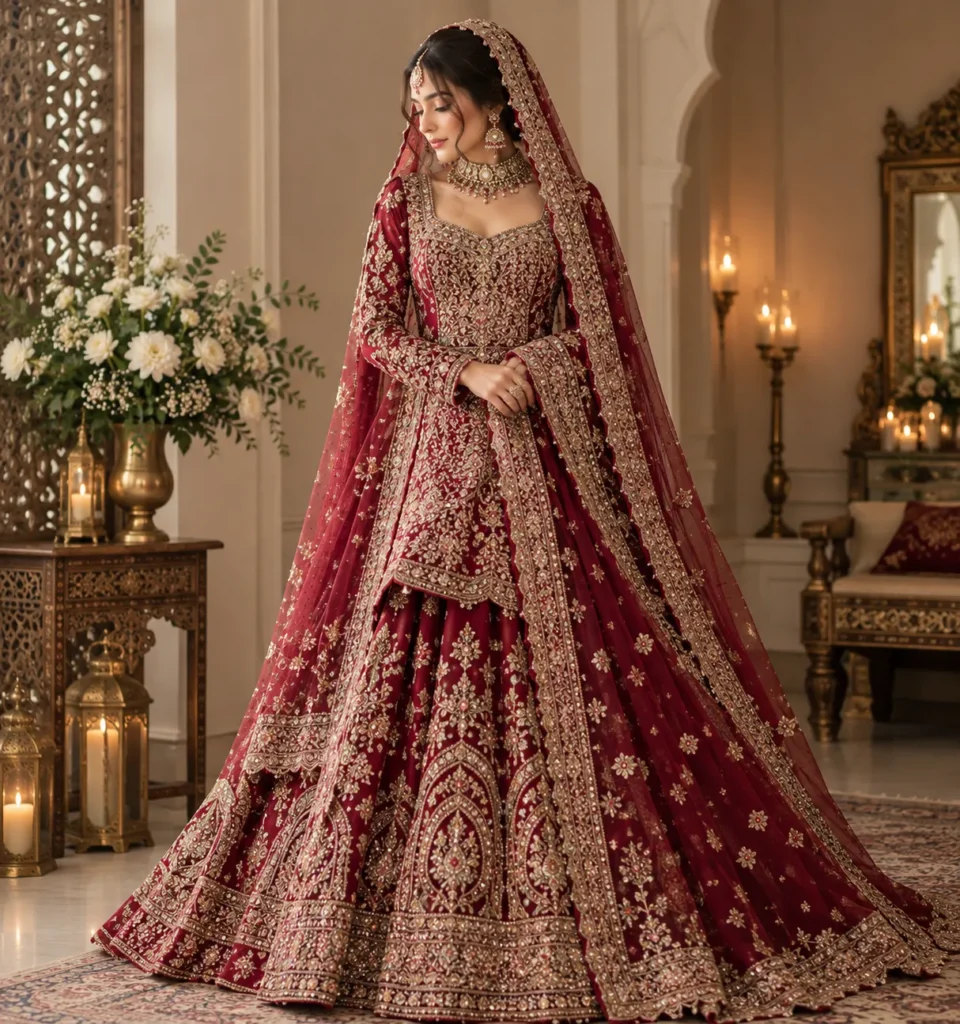
A Pakistani wedding rarely means one dress it means a wardrobe. Between the Mehendi, Nikah, Shaadi, Walima, and every celebration in between, a bride moves through a sequence of looks, each with its own colour palette, silhouette, and level of embellishment. This guide walks through the full spectrum of Pakistani bridal wear, from bridal lehengas and Muslim bridal dresses to fabric choices, embroidery techniques, and practical advice on choosing and shopping for the right outfit.
Whether you’re planning your own wedding wardrobe or shopping for a bridesmaid, sister, or friend, this guide covers everything you need to make confident, informed choices.
Explore Our Pakistani Bridal Wear Collection
Pakistani bridal wear collection is known for its richness heavy embroidery, luxurious fabrics, and silhouettes that range from deeply traditional to distinctly modern. A well-rounded collection typically spans several categories, each suited to a different mood, budget, and occasion. Below is a breakdown of the main styles you’ll come across while shopping for Pakistani bridal dresses.
Bridal Lehengas
The Pakistani bridal lehenga remains the centrepiece of most wedding wardrobes, particularly for the main Shaadi (wedding day) function. Traditional bridal lehengas favour rich, heavily embroidered fabrics in deep reds, maroons, and golds, often finished with dabka, zari, or zardozi work across the skirt and blouse.
For brides who want a lighter feel without losing grandeur, contemporary bridal lehenga styles are cut with softer flare, layered dupattas, and a mix of solid and embellished panels offering the drama of a traditional lehenga with a more wearable structure.
Designer Lehengas
Designer lehengas sit at the premium end of the spectrum, built around fine fabrics like raw silk, organza, and net, paired with intricate hand or machine embroidery. These pieces typically feature more considered detailing think layered dupattas, structured blouses, and embellishment placed with intention rather than covering the entire garment.
Designer lehengas suit brides who want a distinctive, non-repeated look for Shaadi or Walima functions, often with the option of customisation to match a specific colour story or theme.
Party Wear Lehengas
Not every wedding function calls for the heaviest outfit in the wardrobe. Party wear lehengas are designed for evening functions Sangeet, pre-wedding parties, or receptions where guests want an elegant, photograph-ready look without the weight or cost of a full bridal lehenga. These are generally lighter, in fabrics like net or chiffon, with embellishment concentrated on the bodice or hemline.
Crop Top Lehengas
The crop top lehenga has become a popular choice among younger brides and bridesmaids who want a contemporary silhouette. Instead of a traditional long blouse, these pair a fitted or embellished crop top with a flared skirt, often mixed and matched across separates for a more personalised styling approach. It’s a versatile option that photographs well for both daytime and evening functions.
Rajwada & Bollywood Styles
Rajwada-inspired lehengas draw on royal Rajputana aesthetics rich velvets, statement necklines, and heavy gota or zardozi work while Bollywood-style lehengas take cues from on-screen bridal fashion, often featuring dramatic capes, trailing dupattas, or high-drama silhouettes. Both styles are chosen by brides who want their outfit to make a strong visual statement at the Shaadi or reception.
Semi-Stitched & Readymade Lehengas
For brides working against the clock, semi-stitched and readymade lehengas offer a practical middle ground. Semi-stitched sets allow for minor tailoring adjustments to achieve a personal fit, while readymade lehengas are ready to wear straight out of the box ideal for last minute functions, out-of-town guests, or brides who prefer not to deal with fitting appointments.
Muslim Special Bridal Wear
Muslim weddings follow their own sequence of ceremonies, and bridal wardrobes are often built specifically around Nikah and Walima requirements, along with modest, elegant options for other functions.
Nikah & Walima Dresses
The Nikah ceremony calls for an outfit that balances modesty with elegance often a rich but not overly heavy ensemble in a colour that suits daytime or evening lighting, depending on when the Nikah takes place. Walima, being the reception hosted by the groom’s family, typically allows for a more elaborate, statement-making outfit a designer gown, an embellished lehenga, or a heavily worked maxi are all popular choices.
Sharara & Gharara Sets
Sharara and gharara are two of the most recognisable silhouettes in Pakistani bridal wear, and while they’re often mentioned together, they aren’t the same thing. A sharara is a flared, wide legged trouser that flows from the waist, while a gharara is distinguished by a fitted upper leg that flares out sharply below the knee, creating a more structured, bell-like silhouette. Both are traditionally paired with a fitted kurta or short shirt and a dupatta, and both have been reinterpreted with modern cuts, contemporary fabrics, and lighter embroidery for brides who want the traditional look with a current edit.
Maxi Gowns
Floor length maxi gowns offer a graceful, comparatively low-maintenance option for Walima, reception, or evening functions. Cut in flowing fabrics like chiffon or georgette and finished with embroidered borders or bodices, maxis suit brides who want elegance without the structure and weight of a lehenga.
Floor-Length Frocks
Similar in silhouette to the maxi but often more fitted through the bodice, floor-length frocks are a feminine option for bridal and formal wear. They’re frequently chosen for smaller or more intimate functions where comfort and ease of movement matter as much as embellishment.
Double Dupatta Styles
Double dupatta styling draping two dupattas together, often in contrasting fabrics or colours adds visual layering and drama to a bridal look without requiring additional embroidery on the main outfit. This styling technique is especially popular for Nikah and Walima looks, where it lends a traditional, ceremonial feel.
Pakistani Ethnic Wear for Different Occasions
Bridal wardrobes extend beyond the bride herself family members, bridesmaids, and guests all need occasion-appropriate ethnic wear.
Salwar Suits
Salwar suits remain a versatile staple for both pre wedding functions and daytime events. Available in countless fabric and embroidery combinations, they range from simple cotton sets for Mehendi mornings to heavily embellished versions suitable for Sangeet or evening functions.
Sarees
The saree offers timeless elegance for wedding guests and family members. Silk and organza sarees with embroidered borders or embellished pallus are popular choices for Shaadi and reception functions, offering a graceful alternative to lehengas.
Designer Gowns
Designer gowns provide a modern, Western-influenced option for receptions and evening events, often incorporating traditional embroidery techniques onto contemporary silhouettes a popular choice for brides or guests who want a fusion look.
Sherwanis for Grooms
No bridal wardrobe conversation is complete without the groom. Sherwanis long, structured coats worn over a kurta and churidar are typically coordinated with the bride’s outfit in colour or embroidery style, especially for the main Shaadi function.
Pakistani Bridal Wear for Every Wedding Occasion
Choosing what to wear for each function can feel overwhelming given how many events a Pakistani wedding typically includes. Here’s a general guide to help match outfits to occasions:
| Occasion | Recommended Outfits |
| Nikah | Maxi, Sharara, Gharara, Elegant Lehenga |
| Walima | Designer Gown, Maxi, Embellished Lehenga |
| Shaadi | Bridal Lehenga, Heavy Embroidered Lehenga |
| Mehendi & Haldi | Colourful Lehenga, Sharara, Gharara |
| Sangeet | Party Wear Lehenga, Crop Top Lehenga |
| Reception | Designer Gown, Luxury Lehenga |
| Baby Shower | Light Embroidered Ethnic Wear |
These are general guidelines rather than fixed rules — personal style, family traditions, and regional customs all play a role in the final decision.
Choose the Right Fabric for Your Bridal Outfit
Fabric affects everything from how an outfit drapes to how comfortable it is to wear for hours at a time. Here’s a look at the most common fabrics used in Pakistani bridal wear.
Net & Chiffon
Net and chiffon are lightweight, breathable fabrics known for their elegant drape and movement. They’re commonly used for dupattas, overlays, and lighter bridal outfits, particularly for daytime or warm-weather functions where comfort is a priority.
Velvet & Silk
Velvet and silk bring richness and structure, making them popular choices for traditional bridal lehengas and heavier winter-wedding outfits. Velvet in particular holds embroidery well and adds visual depth, while silk offers a smooth, luxurious sheen.
Organza & Jamawar
Organza has a crisp, structured feel that holds embellishment beautifully, making it a favourite for statement bridal pieces and dupattas. Jamawar, a traditionally woven fabric with intricate patterns, adds a heritage feel and works well for both bridal and festive wear.
Viscose
Viscose offers a soft, breathable alternative that mimics the feel of silk at a more accessible price point. It’s a versatile choice for semi-formal ethnic wear and occasions that call for comfort over heavy embellishment.
Pakistani Bridal Embroidery & Craftsmanship
Embroidery is what gives Pakistani bridal wear its signature richness. Understanding the different techniques can help when comparing quality and value across outfits.
Zardozi & Zari
Zardozi is a traditional metallic embroidery technique using gold and silver toned threads to create raised, textured patterns historically associated with royal and bridal wear. Zari refers to the fine metallic thread itself, often woven into fabric or used within embroidery to add a subtle shimmer.
Dabka & Kora
Dabka involves coiled metallic wire stitched onto fabric to create a textured, dimensional effect, while kora uses a similar coiled thread in a flatter finish. Both techniques are frequently combined with sequins, beads, and stonework for full bridal embellishment.
Stone & Pearl Work
Stone and pearl embellishments add sparkle and dimension, often used to highlight necklines, sleeves, or borders. This type of work is popular for adding glamour to both bridal lehengas and lighter party wear pieces.
Hand Embroidery
Hand embroidery represents the most labour-intensive and often most valuable form of bridal detailing. Skilled artisans can take days or weeks to complete a single piece, and the resulting texture and precision are generally considered superior to machine embroidery — an important factor for brides prioritising craftsmanship.
How to Choose the Perfect Pakistani Bridal Dress
With so many styles, fabrics, and embroidery options available, narrowing down the right outfit comes down to a few key considerations:
- Wedding occasion — match the formality and weight of the outfit to the specific function
- Personal style — traditional, contemporary, or a fusion of both
- Body comfort — consider how long you’ll be wearing the outfit and how much movement it allows
- Fabric selection — balance the look you want with the season and venue
- Embroidery level — heavier for Shaadi and Walima, lighter for daytime or smaller functions
- Colour selection — traditional reds and golds, or contemporary pastels and jewel tones
- Dupatta styling — single, double, or draped styles that suit the overall look
- Budget — set a realistic range across your full wardrobe, not just one outfit
- Stitching and fitting — readymade, semi-stitched, or fully customised
- Accessories and jewellery coordination — ensure the outfit and jewellery complement rather than compete
Pakistani Bridal Wear Shopping Preferences
Before finalising a purchase, it helps to think through a few practical factors that affect both the shopping experience and the final result:
- Ready-made vs semi-stitched — depending on timeline and fit preferences
- Customisation options — availability of colour, fabric, or design changes
- Fabric quality — checking weight, finish, and durability
- Embroidery quality — hand versus machine work, thread quality, finishing
- Size and fitting — accurate measurements and sizing charts
- Delivery timeline — especially important for destination or short-notice weddings
- Budget — comparing value across different price points
- Return/exchange policies — particularly relevant for online purchases
Bridal Wear Customer Services
A good bridal shopping experience often comes down to the support available alongside the outfit itself. Look for services such as:
- Personal styling assistance
- Size and fitting guidance
- Customisation options
- Fabric consultation
- Occasion-based recommendations
- Bridal outfit selection support
- Dupatta styling assistance
- Order and delivery support
These services can make a significant difference, particularly for brides shopping from a distance or working within a tight timeline.
Why Choose Pakistani Bridal Wear?
Pakistani bridal wear has earned its global reputation for good reason:
- Rich embroidery that reflects generations of craftsmanship
- Traditional techniques like zardozi, dabka, and hand embroidery
- Elegant silhouettes ranging from classic lehengas to contemporary gowns
- Premium fabrics suited to every season and occasion
- Variety of styles covering every function in a multi-day wedding
- Suitability for multiple occasions from Mehendi to Walima
- A balance of tradition and contemporary design, appealing to brides across generations and styles
Conclusion
Pakistani bridal wear is less about a single dress and more about building a wardrobe that carries a bride through every stage of her wedding celebrations. From the intricate zardozi work on a Shaadi lehenga to the flowing ease of a Nikah sharara, each piece is shaped by decades of craftsmanship, regional tradition, and evolving bridal fashion.
Whether you’re drawn to a heavily embellished bridal lehenga, a modest and elegant Nikah outfit, or a modern crop-top silhouette, the right choice comes down to matching the outfit to the occasion, your comfort, and your personal style without losing sight of budget and timeline. With the right fabric, embroidery, and fit, Pakistani bridal wear offers a look for every function, every body, and every bride.
If you’re ready to start building your bridal wardrobe, explore the collection below or reach out for personalised styling guidance.