
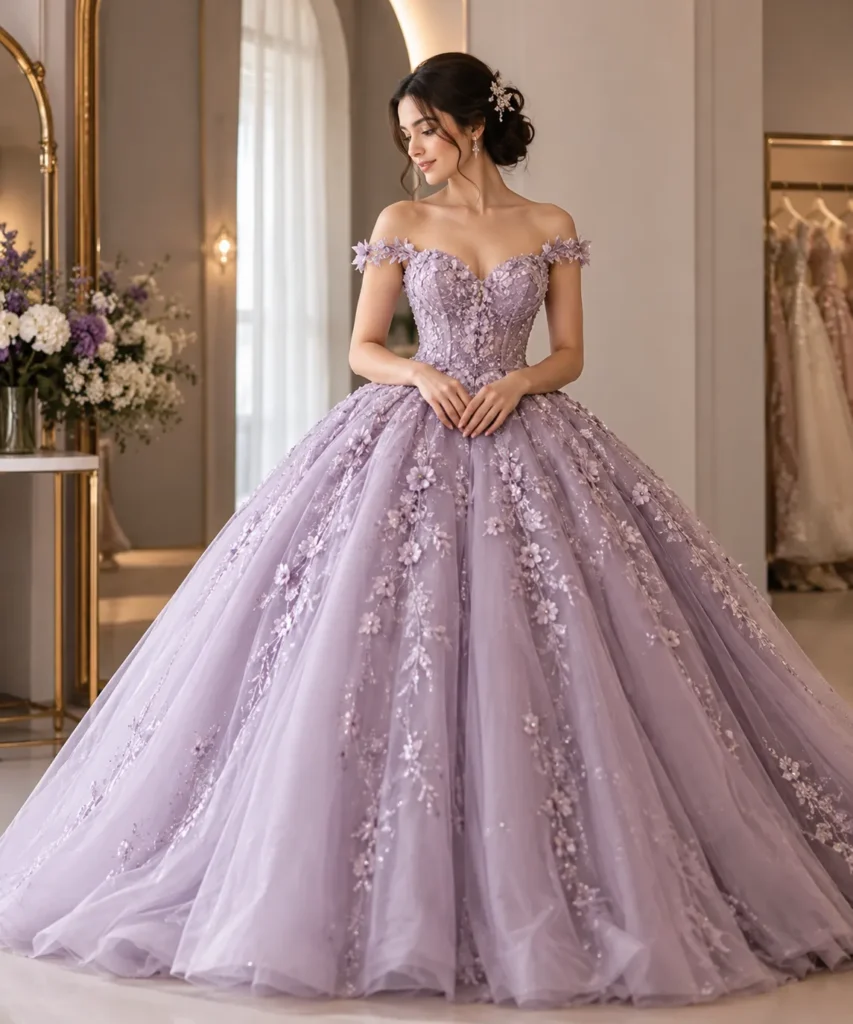
A ball gown has a way of transforming a moment. Whether it’s a bride walking down the aisle, a guest attending a reception, or a young girl at her first festive celebration, the right gown adds structure, elegance, and a sense of occasion that few other garments can match. But with so many silhouettes, fabrics, and design details available today, choosing the right ball gown can feel overwhelming.
This guide walks through everything you need to know about ball gowns from classic silhouettes and luxury fabrics to occasion-based recommendations, body-type styling, colour trends, and gown care. Whether you’re shopping for a wedding, a reception, or a special celebration, this guide will help you make a confident, informed choice.
What Are Ball Gowns?
A ball gown is a formal dress traditionally characterised by a fitted bodice and a full, voluminous skirt that flares out from the waist. Historically worn at royal balls and formal galas, the silhouette was designed to make a dramatic entrance and allow ease of movement while dancing.
The defining features of a traditional ball gown include a structured bodice, a natural or slightly dropped waistline, and a skirt built with layers of fabric or crinoline to create fullness. This is what sets a ball gown apart from a standard evening dress evening gowns tend to follow a slimmer, body-hugging silhouette, while ball gowns are built around volume and drama.
Ball gowns remain popular for formal occasions because they carry a timeless sense of grandeur. They photograph beautifully, suit a wide range of body types when styled correctly, and give the wearer room to incorporate rich embroidery, embellishment, and fabric detailing without looking overdone.
Modern designers have reworked the traditional silhouette considerably. Today’s ball gowns borrow from bridal wear, Indo-Western fashion, and contemporary evening wear, resulting in styles that range from classic and regal to fusion and minimalist. This adaptability is part of why ball gowns continue to be a go-to choice for weddings, receptions, and formal events across cultures.
Popular Ball Gown Categories & Styles
A-Line Gowns
The A-line gown is one of the most versatile and widely chosen silhouettes. It skims the body through the bodice and gradually flares out toward the hem, creating a shape similar to the letter “A.” This gentle flare makes it flattering across nearly all body shapes, since it doesn’t cling tightly or add excessive volume at any one point.
A-line gowns work well for both weddings and formal events because they balance structure with comfort. They’re easy to move and dance in, which makes them a practical choice for receptions and long events.
Anarkali Gowns
With roots in traditional Indian fashion, the Anarkali gown features a fitted upper bodice that flows into a long, often floor-length flared skirt. The silhouette is soft and graceful, making it a popular choice for weddings, sangeet functions, and festive occasions.
Anarkali gowns are often made in rich fabrics with embroidery, sequin work, or zari detailing, giving them a celebratory, festive character that suits Indian wedding functions particularly well.
Evening Gowns
Evening gowns are generally more fitted and streamlined than traditional ball gowns, though the two categories often overlap in modern collections. They’re designed for elegant formal settings think receptions, galas, award functions, and upscale dinners.
Evening gowns tend to favour sleeker fabrics like satin or chiffon and are often designed with statement necklines, slits, or subtle embellishment rather than heavy volume.
Indo-Western Gowns
Indo-Western gowns blend traditional Indian elements such as embroidery styles, drape techniques, or fabric choices with Western silhouettes like fitted bodices or structured skirts. This fusion styling has become increasingly popular for pre-wedding functions, receptions, and cocktail events, offering brides and guests a way to honour tradition while wearing something contemporary.
White Wedding Gowns
For brides choosing a Western-style wedding look, white gowns remain the classic choice. These are typically crafted from lace, satin, or tulle, and can range from minimal and modern to heavily embellished and traditional. White wedding gowns often feature detailing like beadwork, appliqué, or layered tulle skirts to create that classic bridal silhouette.
Kids & Flower Girl Dresses
Flower girl and kids’ gowns are designed with both style and practicality in mind. Soft, breathable fabrics, comfortable fits, and age-appropriate detailing are essential, since children need to move freely throughout the event. These gowns are typically simpler versions of adult ball gowns, often finished with bows, light embroidery, or tulle layers.
Pakistani Gown Designs
Pakistani gown designs are known for their intricate embroidery, rich fabric choices, and flowing silhouettes. These gowns often feature detailed threadwork, mirror work, or hand embroidery, and are commonly worn for weddings and festive celebrations. The craftsmanship in these gowns tends to be a central selling point, with embroidery techniques passed down through generations of artisans.
Night Gowns
Night gowns, in the formal wear context, refer to glamorous evening designs suited for parties and after-dark events. These often feature more daring necklines, metallic or sequin fabrics, and sleeker silhouettes designed to catch the light under evening venue lighting.
Luxury Fabrics Used for Ball Gowns
The fabric of a ball gown affects everything from how it drapes to how it photographs and how comfortable it is to wear for hours at a time.
Satin & Taffeta
Satin has a smooth, lustrous finish that gives gowns a polished, formal appearance. Taffeta, on the other hand, has more structure and a slight stiffness, which helps ball gowns hold their shape and volume. Both are popular choices for bridal and formal gowns where a crisp silhouette is desired.
Net & Lace
Net and lace bring a delicate, romantic quality to gowns. They’re frequently used for bridal wear and layered skirts, where net creates volume and lace adds intricate detailing. These fabrics are often combined with satin or silk linings for both structure and comfort.
Silk
Silk is prized for its natural sheen and soft drape. Within this category, pure silk offers the richest texture and highest price point, while art silk (artificial silk) provides a similar look at a more accessible cost. Chanderi silk, known for its lightweight, sheer quality, is often used in gowns that need to combine traditional texture with a breathable finish.
Chiffon & Georgette
Chiffon and georgette are lightweight, flowing fabrics that move beautifully — ideal for gowns that will be worn for long events like receptions or outdoor functions. Their breathability makes them a comfortable choice in warmer climates or during summer weddings.
Organza & Tulle
Organza and tulle are the go-to fabrics for creating volume. Layered tulle skirts give gowns that fairy-tale, voluminous look often seen in bridal and quinceañera-style gowns, while organza offers a slightly crisper texture with a subtle sheen.
Velvet & Brocade
Velvet and brocade bring richness and texture, making them well-suited for winter weddings and evening events. Velvet’s soft, deep pile and brocade’s woven patterns both convey a premium, luxurious feel, often used in gowns designed for cooler-weather celebrations.
Best Ball Gowns for Different Occasions
Bridal & Wedding Gowns
For the wedding ceremony itself, structured silhouettes in white, ivory, or pastel tones tend to dominate. Satin, lace, and tulle are common fabric choices, often paired with detailed embroidery or beadwork at the bodice. Styling typically leans classic and elegant, with minimal but well-placed embellishment.
Reception & Engagement Dresses
Receptions and engagements call for gowns with more colour and shimmer. Jewel tones, metallics, and sequin or embroidered detailing work well here, as these events are typically more celebratory and less traditional than the ceremony itself.
Sangeet & Haldi Wear
Sangeet functions favour brighter colours, playful silhouettes, and lighter fabrics that allow for dancing, such as Anarkali gowns or Indo-Western designs in georgette or chiffon. Haldi functions typically call for yellow or pastel tones in simpler, breathable fabrics.
Cocktail & Gala Dresses
Cocktail and gala events suit shorter or fitted evening gowns with statement details — think sequins, metallic fabrics, or bold necklines. These occasions allow for more experimental styling compared to traditional bridal wear.
Pre-Wedding & Maternity Shoots
For pre-wedding and maternity photoshoots, flowing fabrics like chiffon and georgette in soft pastel or jewel tones photograph beautifully, especially in outdoor settings. Comfort and ease of movement are key considerations here.
Birthday & Festive Wear
Birthday and festive occasions offer more flexibility in colour and design, often incorporating trend-driven elements like 3D floral appliqués, sequins, or bold jewel tones for a celebratory look.
Ball Gown Design Elements
Embroidery
Embroidery is one of the most defining features of a luxury ball gown. Zari work uses metallic thread to create intricate patterns, resham embroidery uses silk thread for softer, colourful detailing, and hand embroidery often the most labour-intensive adds a bespoke, artisanal quality to a gown.
Beads, Stones & Pearls
Beadwork, stone embellishment, and pearl detailing add texture and shimmer to a gown. These are often concentrated on the bodice or neckline to draw attention upward, or scattered across the skirt for an all-over sparkle effect.
Sequins & Glitter Work
Sequin and glitter detailing catch the light beautifully under evening and reception lighting, making them a popular choice for night events, cocktail parties, and receptions where photography and visual impact matter.
3D Flowers & Appliqués
Three-dimensional floral appliqués add texture and a romantic, whimsical quality to gowns. These are especially popular in bridal wear and pre-wedding shoot gowns, where the added dimension photographs well.
Ruffles & Frills
Ruffles and frills add movement and volume without the weight of heavy embellishment, making them a good option for gowns meant to be worn for extended periods, such as reception wear.
Off-Shoulder & Sweetheart Necklines
Necklines significantly shape how a gown is perceived. Off-shoulder necklines draw attention to the collarbone and shoulders and suit a range of body types, while sweetheart necklines create a soft, romantic frame for the face and are a long-standing bridal favourite.
Choosing a Ball Gown for Your Body Type
Styling a ball gown is about finding a fit and silhouette that make you feel comfortable and confident not about following rigid rules. Use these as general starting points rather than strict guidelines.
Pear-Shaped Bodies: A-line and ball gown silhouettes that flare from the waist can balance proportions nicely, while detailing at the neckline or bodice draws attention upward.
Hourglass Figures: Fitted bodices that follow the natural waistline tend to highlight this shape well, paired with a gently flared or structured skirt.
Apple-Shaped Bodies: Empire waistlines or gowns with a flowing skirt from just below the bust can create a flattering, elongated line.
Rectangle Body Shapes: Gowns with defined waist detailing, such as belts, ruching, or structured seams, can help create the appearance of curves.
Petite Women: Gowns with vertical detailing, higher waistlines, and lighter fabrics can help avoid overwhelming a smaller frame, while floor-sweeping skirts should be hemmed carefully to avoid bulk.
Plus-Size Women: Structured bodices with good support, combined with A-line or gently flared skirts, offer both comfort and a flattering silhouette. Fabrics with a bit of structure, like satin or taffeta, often hold their shape better than very soft, clingy fabrics.
The most important factor is fit a well-tailored gown in any style will look better than an ill-fitting one, regardless of body type.
Popular Ball Gown Colour Trends
Classic Colours
Black, white, and red remain enduring choices. White is the traditional bridal colour, black suits evening and cocktail events, and red carries a bold, celebratory energy suited to receptions and festive functions.
Pastel Shades
Blush, lavender, and mint have become popular for daytime events, pre-wedding shoots, and receptions, offering a soft, romantic aesthetic that photographs particularly well in natural light.
Jewel Tones
Emerald and sapphire bring richness and depth, making them ideal for evening receptions, winter weddings, and festive functions where a more dramatic colour statement is desired.
Metallic Shades
Gold, silver, and rose gold add shimmer and glamour, working especially well for cocktail parties, receptions, and evening galas where lighting enhances metallic fabrics.
Choosing colour by setting: Whites and pastels tend to suit daytime weddings and outdoor photography, while jewel tones and metallics come alive in evening lighting. For festive occasions, brighter, saturated colours generally photograph and read better in group settings.
How to Choose the Right Ball Gown
When narrowing down your options, consider the following factors together rather than in isolation:
- Occasion – Match the formality and cultural context of the event.
- Body shape and preferred fit – Choose a silhouette that complements your proportions and comfort level.
- Fabric – Consider both appearance and how the fabric will feel over several hours.
- Colour – Factor in the venue, lighting, and time of day.
- Neckline – Pick a style that flatters your upper body and pairs well with your chosen jewellery.
- Sleeve style – Sleeveless, cap sleeves, or full sleeves each change the overall look and practicality.
- Embroidery – Decide how much embellishment suits the occasion without overwhelming the design.
- Length – Floor-length for formal events, shorter hemlines for cocktail settings.
- Comfort – Especially important for events involving standing, dancing, or long ceremonies.
- Budget – Set a realistic range early, factoring in alterations and accessories.
- Customisation – Decide if you want a ready-made gown or a made-to-order design.
- Season and venue – Lightweight fabrics for summer or outdoor events, richer fabrics like velvet for winter or indoor formal settings.
How to Style a Ball Gown
Jewellery
Statement earrings work beautifully with off-shoulder or strapless necklines, while a delicate necklace can complement a high neckline. Bracelets add a finishing touch without competing with an already detailed sleeve or bodice.
Hairstyles
Updos keep the focus on the neckline and gown detailing, soft curls add a romantic touch, and sleek hairstyles suit more modern, minimalist gown designs.
Ball Gown Care & Maintenance
Proper care extends the life of a ball gown, especially given the delicate fabrics and embellishments often involved.
- Read fabric care labels before attempting any cleaning method.
- Dry cleaning is usually the safest option for silk, velvet, and heavily embellished gowns.
- Proper folding or hanging — use padded hangers for structured gowns to avoid shoulder marks, and store lighter gowns in breathable garment bags.
- Avoid moisture, which can damage delicate fabrics like silk and cause embellishments to tarnish.
- Protect embroidery and embellishments by storing gowns away from friction and direct pressure.
- Address stains promptly, and always consult a professional cleaner for delicate or embellished fabrics rather than attempting DIY stain removal.
- Long-term storage should be in a cool, dry place, ideally in acid-free tissue paper and a breathable garment bag, away from direct sunlight.
Where to Buy Ball Gowns
Whether you’re looking for a ready-to-wear gown or a fully custom design, most boutiques offer a range of options to suit different needs:
- Ready-to-wear options for those working within a shorter timeline
- Custom-designed gowns for a fully personalised fit and design
- Size options ranging from petite to plus-size
- Fabric selection to match your occasion and comfort preferences
- Alteration services to ensure the perfect fit
- Personal styling assistance to help narrow down silhouette, colour, and detailing choices
If you’re searching for a ball gown boutique or designer ball gowns near you, look for a retailer that offers both ready-made and custom options, along with in-house alteration and styling support this combination generally provides the most flexibility.
Ball Gown Supplier & Market Considerations
Choosing a Reliable Ball Gown Supplier
For boutiques, designers, and bulk buyers, selecting the right supplier is critical to consistent quality. Key factors to evaluate include:
- Fabric quality – Request samples before committing to bulk orders.
- Stitching quality – Inspect seam finishing and structural support, especially for heavily embellished gowns.
- Customisation – Confirm whether the supplier can accommodate design changes or made-to-measure requests.
- Minimum order quantities – Understand MOQ requirements before finalising a partnership.
- Delivery timelines – Factor in production time, especially for heavily embroidered or custom pieces.
- Size availability – Check whether the supplier offers an inclusive size range.
- Embellishment quality – Ensure beadwork, sequins, and embroidery are securely attached and consistent across units.
- Wholesale vs retail pricing – Clarify pricing tiers based on order volume to plan margins accurately.
Conclusion
Ball gowns endure because they do something few other formal styles can: they turn an outfit into an occasion. The fitted bodice and full skirt create a sense of arrival a shape built for moments that matter, from the aisle to the dance floor to the reception photos that get looked at for years afterward.
What makes today’s landscape interesting is the range within that one idea. A satin-and-tulle bridal gown, an embroidered Anarkali, an Indo-Western fusion piece, a sequined cocktail number all technically live under the “ball gown” umbrella, yet they serve completely different moments and moods. That’s good news for shoppers: there’s no single “correct” ball gown, only the right one for a given occasion, body, budget, and personal taste.
The choices that matter most are the ones covered in this guide fabric suited to the season and event, a silhouette that flatters rather than fights the body, embellishment scaled to the formality of the occasion, and colour chosen with the venue and lighting in mind. Get those right, and the gown does the rest.