
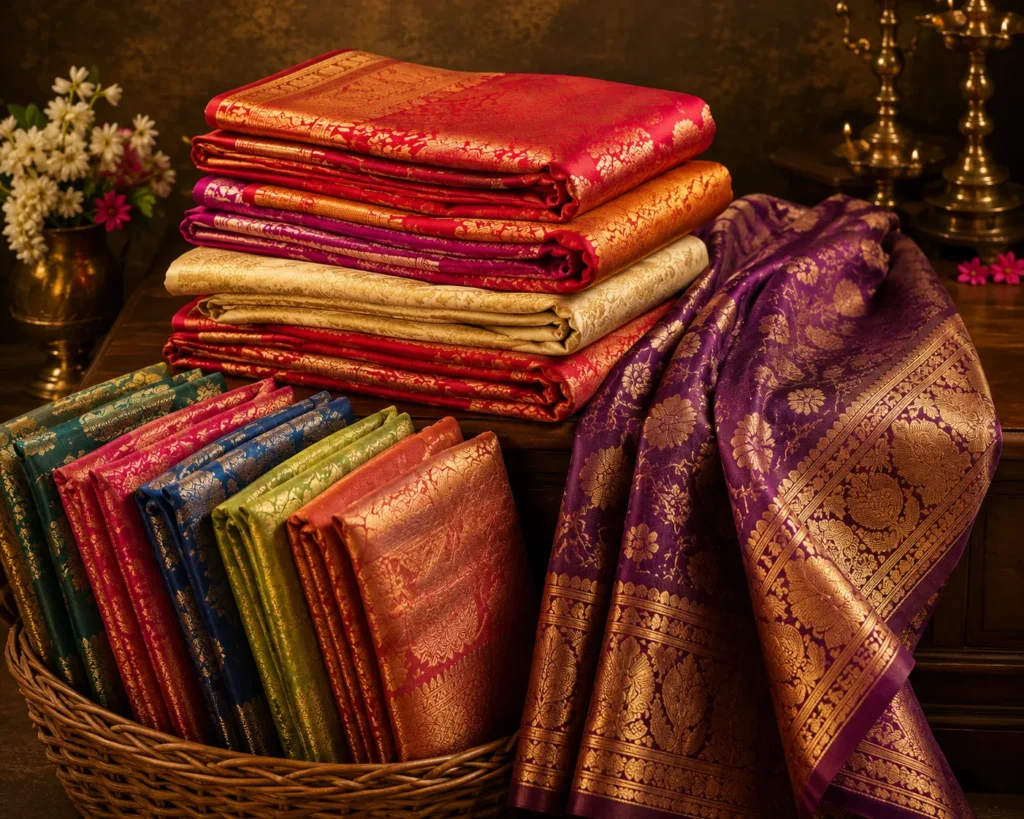
Choosing the right saree is one of the most personal decisions a bride makes for her wedding day. Among South India’s rich textile heritage, the Kanjivaram silk saree holds a place of its own admired for its weight, sheen, and timeless craftsmanship. This guide walks you through everything you need to know about bridal Kanjivaram silk sarees, from fabrics and colours to styling and buying tips, so you can choose a saree that feels as special as the occasion itself.
What Are Bridal Kanjivaram Silk Sarees?
Kanjivaram silk sarees originate from the weaving traditions of South India and are widely recognised for their rich silk body, contrasting borders, and elaborate pallus. When styled for weddings, these sarees are often referred to as bridal Kanjivaram silk sarees a category that emphasises richer colours, denser zari work, and more elaborate motifs than everyday silk sarees.
For South Indian weddings in particular, the Kanjivaram saree is more than an outfit; it’s part of the ceremony itself. Its structured drape, substantial weight, and traditional appearance make it a natural fit for wedding day photographs and rituals that call for a formal, dignified look.
The main difference between an everyday silk saree and a bridal Kanjivaram saree usually comes down to detailing. Bridal versions typically feature wider borders, heavier pallus, richer colour palettes, and motifs inspired by temple architecture and nature all designed to stand out on a day meant to be remembered.
Why Choose a Kanjivaram Silk Saree for Your Wedding?
Traditional Bridal Appeal
Kanjivaram sarees are deeply tied to South Indian wedding customs. For many brides, wearing one connects the day to generations of family tradition, making it a meaningful choice beyond aesthetics alone.
Rich Silk and Elegant Finish
The fabric itself carries a distinct richness a firm drape, a natural sheen, and a texture that photographs beautifully under both daylight and indoor lighting. This is part of why the saree continues to be a bridal favourite despite newer fabric trends.
Timeless Designs
Motifs and border patterns used in Kanjivaram sarees have remained popular across decades. Choosing one means choosing a look that won’t feel dated when you revisit your wedding photos years later.
Suitable for Different Wedding Styles
Whether your wedding follows a traditional format, a contemporary theme, or a fusion of both, there’s usually a Kanjivaram saree style to match from heavily detailed pieces for classic ceremonies to lighter, minimal designs for modern celebrations.
Fabrics Used in Bridal Kanjivaram Sarees
Not all Kanjivaram sarees are woven from the same material. Understanding the fabric options helps you balance tradition, comfort, and the look you want.
Pure Silk
The most traditional choice, pure silk offers a rich texture and luxurious appearance that suits the formality of wedding ceremonies.
Tissue Silk
Tissue silk sarees have a lighter feel and a subtle shine, making them a good option for brides who want a more contemporary bridal look without moving away from silk entirely.
Mulberry Silk
Known for its smooth, soft texture, mulberry silk gives a premium finish and is often favoured for its comfortable feel against the skin.
Silk Cotton
A blend of silk and cotton, this fabric is a practical choice for brides who want the visual appeal of silk with a lighter, more comfortable wear throughout a long wedding day.
Crepe and Georgette
These lightweight fabrics offer a fluid drape, making them popular for more contemporary saree styling, particularly for events outside the main ceremony.
Tussar and Raw Silk
With a distinctive natural texture, tussar and raw silk sarees offer styling flexibility across both traditional and modern bridal looks.
Craftsmanship Behind Bridal Kanjivaram Silk Sarees
The value of a bridal Kanjivaram saree often lies as much in its craftsmanship as in its fabric.
Traditional Weaving Techniques
Kanjivaram sarees are associated with weaving traditions passed down through generations, contributing to the distinct texture and structure that sets them apart from other silk sarees.
Zari Work
Zari the metallic thread work seen on borders, pallus, and motifs plays a major role in the ornamental appeal of bridal sarees, adding richness to the overall design.
Border and Pallu Detailing
The border and pallu are often the most detailed parts of the saree, and their design frequently defines the saree’s overall bridal character.
Traditional Motifs
Motifs inspired by nature, temple architecture, and cultural symbolism are commonly woven into these sarees, adding a layer of meaning to the design.
Bridal Kanjivaram Sarees for Different Occasions
A wedding involves more than one event, and different functions often call for different saree styles.
Wedding Ceremony Sarees
For the main ceremony, richer colours, traditional motifs, and statement bridal styling are commonly preferred to match the formality of the occasion.
Engagement Sarees
Engagement functions often call for lighter or more sophisticated saree options that still carry a bridal feel without being as elaborate as the wedding-day saree.
Reception Sarees
Receptions tend to favour more contemporary and elegant designs, offering a chance to experiment with colours or patterns that differ from the main ceremony look.
Muhurtham Sarees
For the muhurtham, traditional bridal choices are typically favoured, keeping the styling aligned with ritual customs.
Pre-Wedding Functions
Events such as haldi, mehendi, sangeet, and bridal showers offer more flexibility, allowing brides to choose lighter fabrics or brighter, less formal colour combinations.
Curated Bridal Kanjivaram Saree Collections
Depending on personal style, bridal Kanjivaram sarees are often grouped into a few broad collections.
Traditional Bridal Collection
Featuring classic silk, traditional borders, rich zari, and heritage-inspired motifs, this collection suits brides who want a look rooted firmly in tradition.
Contemporary Bridal Collection
This collection leans toward modern colour combinations and more minimal designs, appealing to brides seeking a subtler, present-day aesthetic.
Statement Bridal Collection
For brides who want their saree to be a focal point, this collection includes bold colours, heavy detailing, elaborate borders, and rich pallu designs.
Popular Colours for Bridal Kanjivaram Silk Sarees
Colour is often the first decision a bride makes, and Kanjivaram sarees come in a wide spectrum suited to different preferences.
Rani Pink
A vibrant shade with strong bridal appeal, rani pink offers plenty of styling flexibility with jewellery and blouse choices.
Emerald Green
Deep green shades pair particularly well with traditional gold jewellery, making this a popular choice for classic bridal looks.
Royal Blue
For brides who want a rich, distinctive colour that stands apart from the more commonly seen reds and pinks, royal blue is a striking option.
Maroon and Red
These remain some of the most traditional bridal shades, closely associated with classic South Indian wedding styling.
Mustard and Yellow
Well suited to traditional functions and pre-wedding celebrations, mustard and yellow tones bring warmth without the heaviness of darker shades.
Popular Design Patterns in Bridal Kanjivaram Sarees
Beyond colour, the pattern of the saree body plays a big role in the overall look.
Plain Body
A plain body design keeps the focus on the border and pallu, offering a clean, elegant appearance.
Checks and Stripes
These traditional geometric patterns add structure to the saree while retaining a classic feel.
Butta and Motifs
Small decorative motifs distributed across the saree body add subtle detail without overwhelming the overall design.
All-Over Designs
For a more elaborate bridal appearance, all-over patterns cover most of the saree body, creating a richly detailed look from every angle.
Conclusion
A bridal Kanjivaram silk saree is more than a wedding outfit it’s a piece of tradition, craftsmanship, and personal style woven together. From choosing the right fabric and colour to matching your blouse and finalising your draping style, every decision brings you closer to a look that feels authentically yours on your big day. Take your time exploring fabrics, motifs, and colour palettes, and don’t hesitate to ask questions about weaving and finish before you buy. With the right approach, your bridal Kanjivaram saree can become a cherished keepsake long after the wedding celebrations end.